
Global Industry Trends of Pure Titanium Consumer Goods (Cookware, Outdoor Gear & Gift Sets)
1.Market Scale & Stable High-Speed Growth
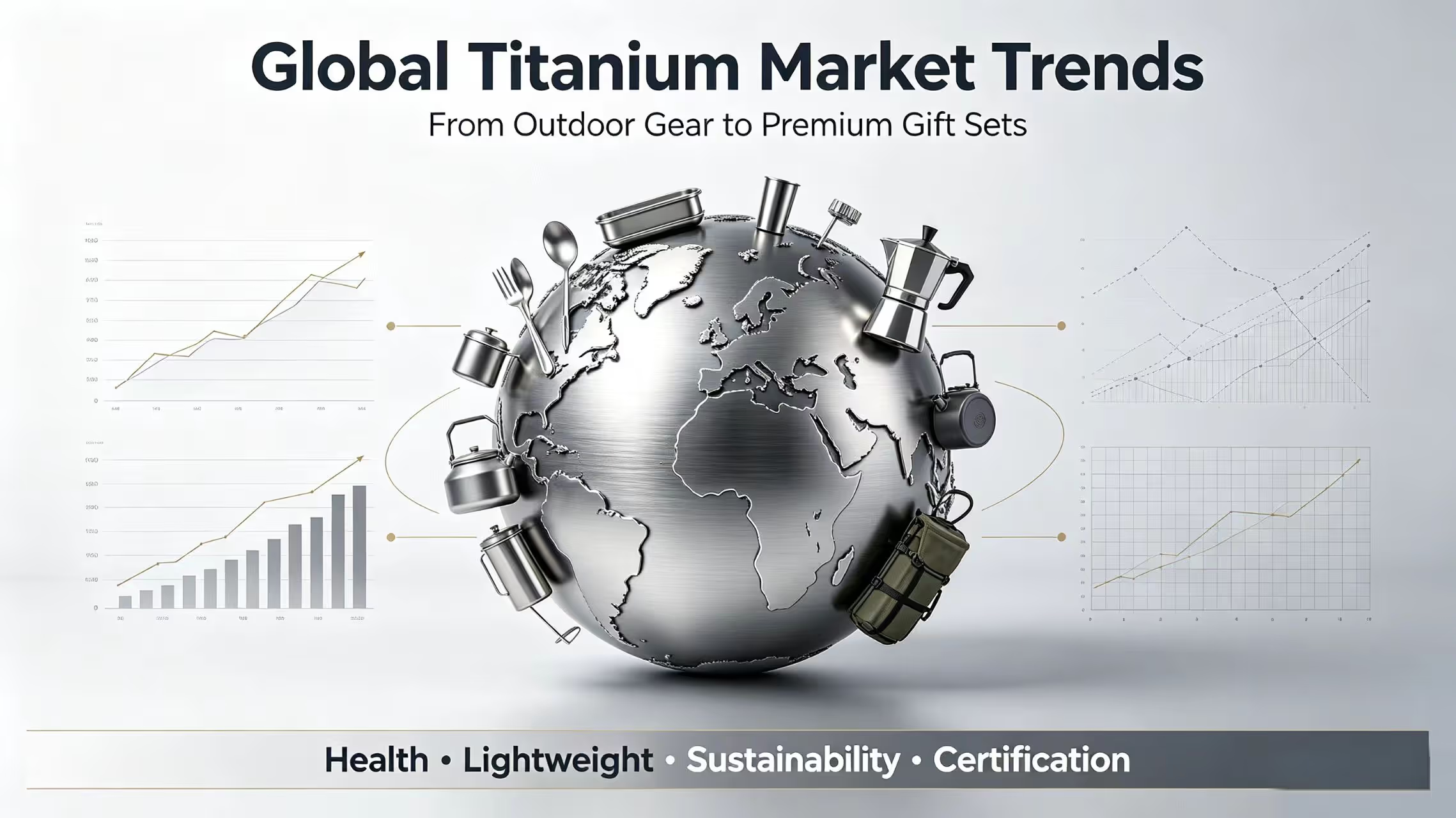
The global market for titanium consumer products (titanium cookware, outdoor tableware, titanium drinkware, gift sets) reached USD 2.516 billion in 2025, and it is projected to hit USD 4.091 billion by 2032, maintaining a CAGR of 7.1%–7.2% from 2026 to 2032.
- Segmented track: Titanium vacuum mugs show stronger growth, with a CAGR of 10.5% forecasted through 2031, driven by health-conscious urban professionals and outdoor enthusiasts.
- High-purity titanium raw material market will expand from USD 4.63 billion (2026) to USD 6.61 billion (2032) at a CAGR of nearly 6%, laying a solid material foundation for downstream consumer goods.
2.Core Growth Drivers Reshape Consumer Demand Logic
(1) Health & Biocompatibility Become Top Purchasing Factor
Pure titanium is hypoallergenic, non-toxic, and free of heavy metal precipitation under high temperatures, with no metallic aftertaste to alter food or beverage flavor. Amid global rising awareness of food safety, consumers are phasing out plastic, aluminum, and coated stainless steel products, especially families with children, seniors, and people with metal allergies.
(2) Global Outdoor Recreation Boom Boost Lightweight Gear Demand
Camping, hiking, backpacking and overlanding have become mainstream leisure lifestyles across North America, Europe, Japan and Southeast Asia. Titanium’s ultra-lightweight feature (50% lighter than equal-volume stainless steel) drastically cuts backpack load, making titanium pots, cups, cutlery and carabiners standard gear for outdoor lovers. EU plastic-restriction policies further accelerate replacement of disposable tableware with reusable titanium kits.
(3) Premium Gift Market Opens New Revenue Track
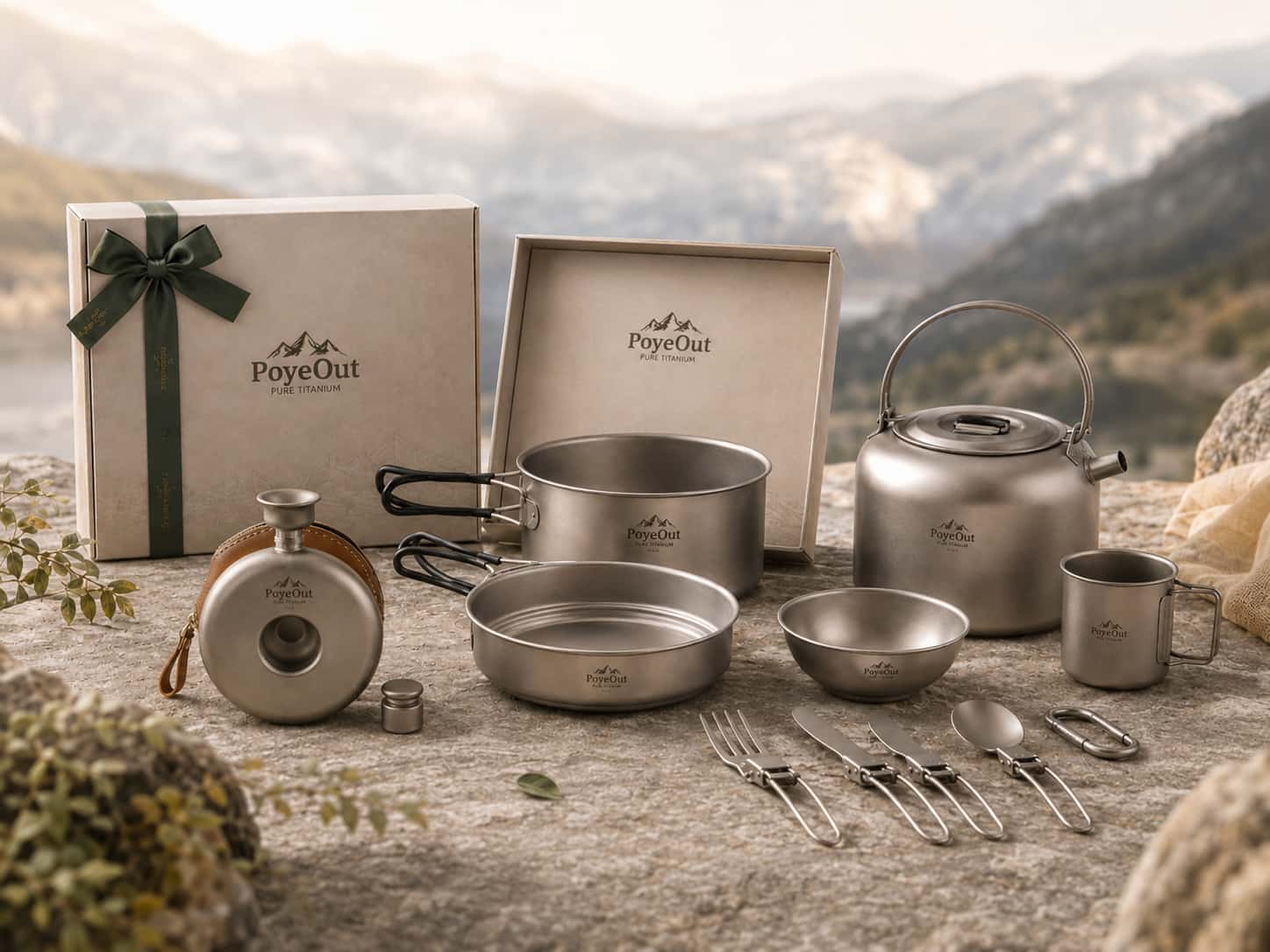
Pure titanium products are evolving from functional outdoor tools to high-end corporate gifts, holiday presents and client appreciation sets. Complete gift box combinations (hip flask sets, coffee pour-over kettle kits, full outdoor cookware combos) enjoy higher profit margins, and demand for customized engraved titanium gift packages surges in business gifting scenarios in Europe, the US and Asia-Pacific.
(4) Sustainability & Circular Economy Policy Support
Titanium is fully recyclable without toxic waste. EU circular economy regulations and North America’s single-use plastic bans push retailers and brands to prioritize durable, zero-waste metal tableware. Recycled titanium material production technologies mature to lower overall manufacturing carbon footprint.
3.Clear Product Evolution Trends
(1) From Single Items to Scene-Based Modular Sets
Early market supply relied on separate titanium cups, chopsticks and pots. Current and future demand leans toward integrated kits tailored to specific scenarios:
- Camping combo: Pot + fry pan + foldable cutlery + mini stove + storage pouch
- Premium gift box: Titanium hip flask / coffee kettle + certificate + fabric storage bag + luxury gift packaging
- Daily portable set: Vacuum mug + mini titanium tableware
Complete sets raise average order value and brand stickiness significantly.
(2) Multi-Functional & Miniaturized Design Prevails
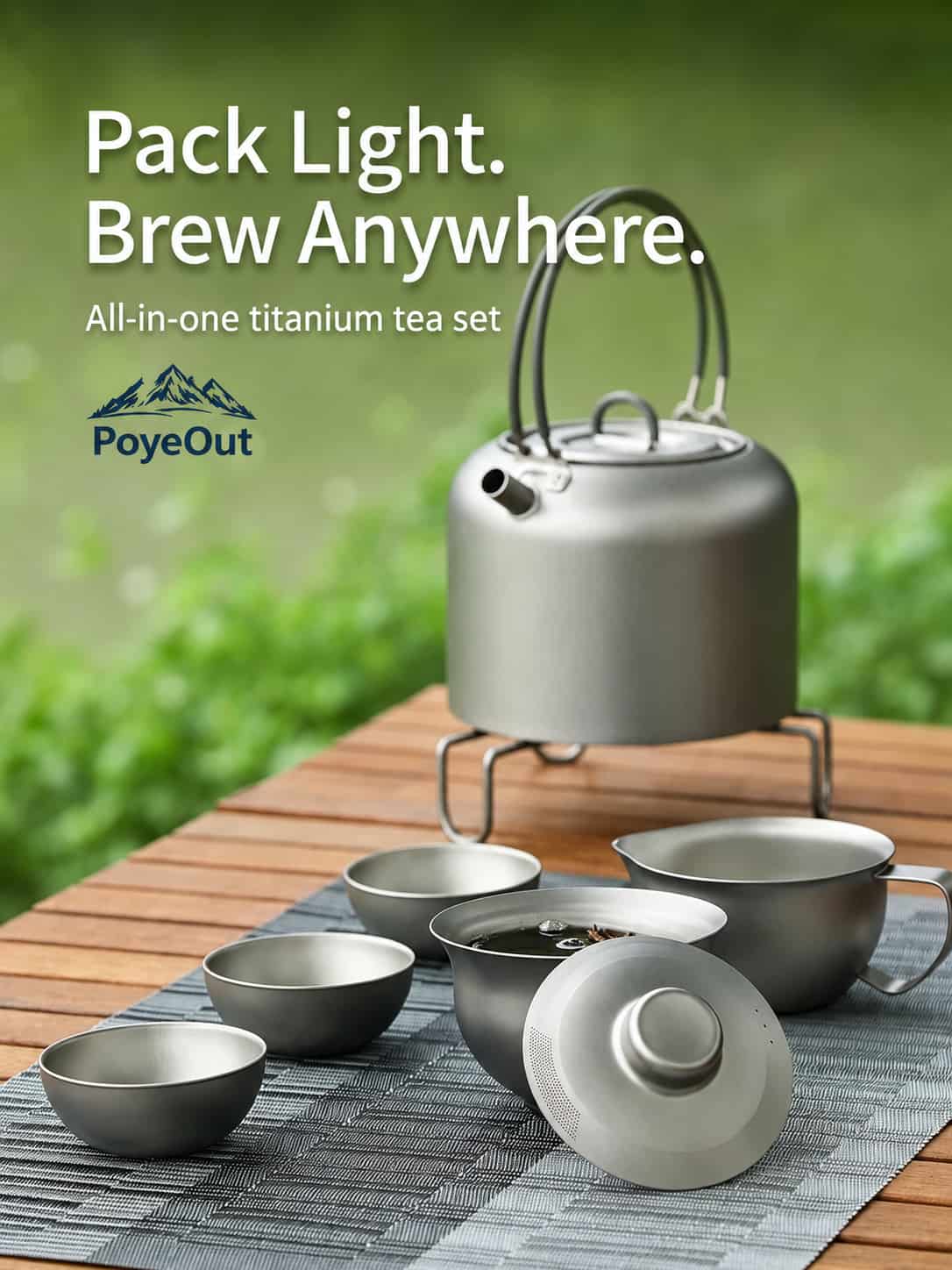
Manufacturers integrate multiple functions into single titanium hardware: multi-tool carabiners with bottle openers, foldable dual-purpose pots, compact pour-over kettles for travel. Mini, stackable, collapsible structures fit minimalist outdoor and urban portable needs, becoming a core competitive differentiation point.
(3) Surface Technology Upgrades Diversify Aesthetics
Anodizing oxidation technology enables colorful titanium finishes (blue, gold, matte grey), breaking the single dull silver appearance of traditional titanium goods. Food-grade nitriding and seamless forming processes enhance scratch resistance and easy-clean performance, balancing durability and visual premium texture.
(4) Cross-Scenario Integration: Outdoor + Daily Home Use
Market boundaries blur. Titanium gear is no longer limited to wilderness camping; lightweight titanium mugs, coffee pots and tableware enter home kitchens, offices and travel bags, expanding total consumption scenarios and customer groups.
4.Regional Market Pattern Differentiation
1. North America: Largest consumption market, dominated by outdoor culture. Consumers prioritize lightweight performance and multi-functionality; e-commerce channels (Amazon, REI) drive mass sales of mid-tier titanium outdoor kits.
2. Europe: Focus on eco-friendliness and premium gifting. Germany, UK and France lead demand for high-end titanium gift sets and zero-plastic reusable tableware, with strict food-grade material certification standards as a market access threshold.
3. Asia-Pacific: Manufacturing core + fast-growing consumption market. China controls over 90% of global pure titanium consumer goods production capacity; Japan, South Korea and Southeast Asia see rapid growth of lightweight titanium travel and camping products, supported by rising middle-class disposable income.
4. Emerging Markets (Australia, New Zealand, Canada): Steady growth driven by outdoor tourism and corporate gifting industries.
5.Industry Challenges & Restraining Factors
1. High Raw Material & Processing Costs: Titanium smelting and cold stamping require high energy input and complex equipment, resulting in retail prices 3–8 times higher than stainless steel equivalents, limiting penetration in low-income consumer groups.
2. Counterfeit Market Interference: Low-quality titanium alloy, coated steel and fake “titanium-plated” products flood cross-border markets, damaging brand reputation and confusing consumers on material purity standards.
3. Supply Chain Geopolitical Risks: Most high-purity titanium raw materials concentrate in limited producing regions; US tariff adjustments and EU trade policy revisions create uncertainty for export manufacturers’ profit margins.
4. Material Performance Limitations: Pure titanium has lower thermal conductivity than aluminum, requiring optimized composite structures for cookware to balance heating uniformity and lightweight advantages.
6.Future Strategic Opportunities (2026–2032)
(1) Mid-Tier Price Band Expansion
Advancements in recycling titanium and integrated forming manufacturing cut production costs, enabling brands to launch cost-effective entry-level titanium products, expanding market coverage beyond only high-end niche buyers.
(2) Customization & ODM/OEM Growth
Corporate clients and boutique outdoor brands demand personalized engraving, custom gift box packaging and scenario-tailored combo kits. Manufacturers with flexible small-batch customization capacity will capture larger B2B order shares.
(3) Cross-Border E-Commerce & Social Media Marketing Rise
Instagram, TikTok and YouTube outdoor KOL content greatly boost exposure of titanium gear. DTC direct-to-consumer brands bypass offline retailers to improve profit margins, making short-video content marketing a core sales growth channel.
(4) Technology Innovation Breakthroughs
3D printing for complex titanium parts, smart temperature-sensing titanium vacuum mugs, and composite titanium-aluminum cookware will launch new product categories and build unique brand competitive barriers.
(5) Standardization of Purity Certification
Global unified food-grade pure titanium testing standards (SGS, FDA, EU LFGB) will eliminate counterfeit chaos; certified high-purity (99.9%+) titanium products will win long-term consumer trust and cross-border market priority access.
Closing Outlook
Pure titanium consumer goods are transitioning from a niche luxury category to mainstream premium daily necessities. Driven by health trends, outdoor recreation expansion and sustainable policies, the industry will maintain stable long-term growth. Enterprises focusing on scene-based set development, material certification, and premium gift packaging will secure the largest share of global market incremental demand over the next 6–7 years.