
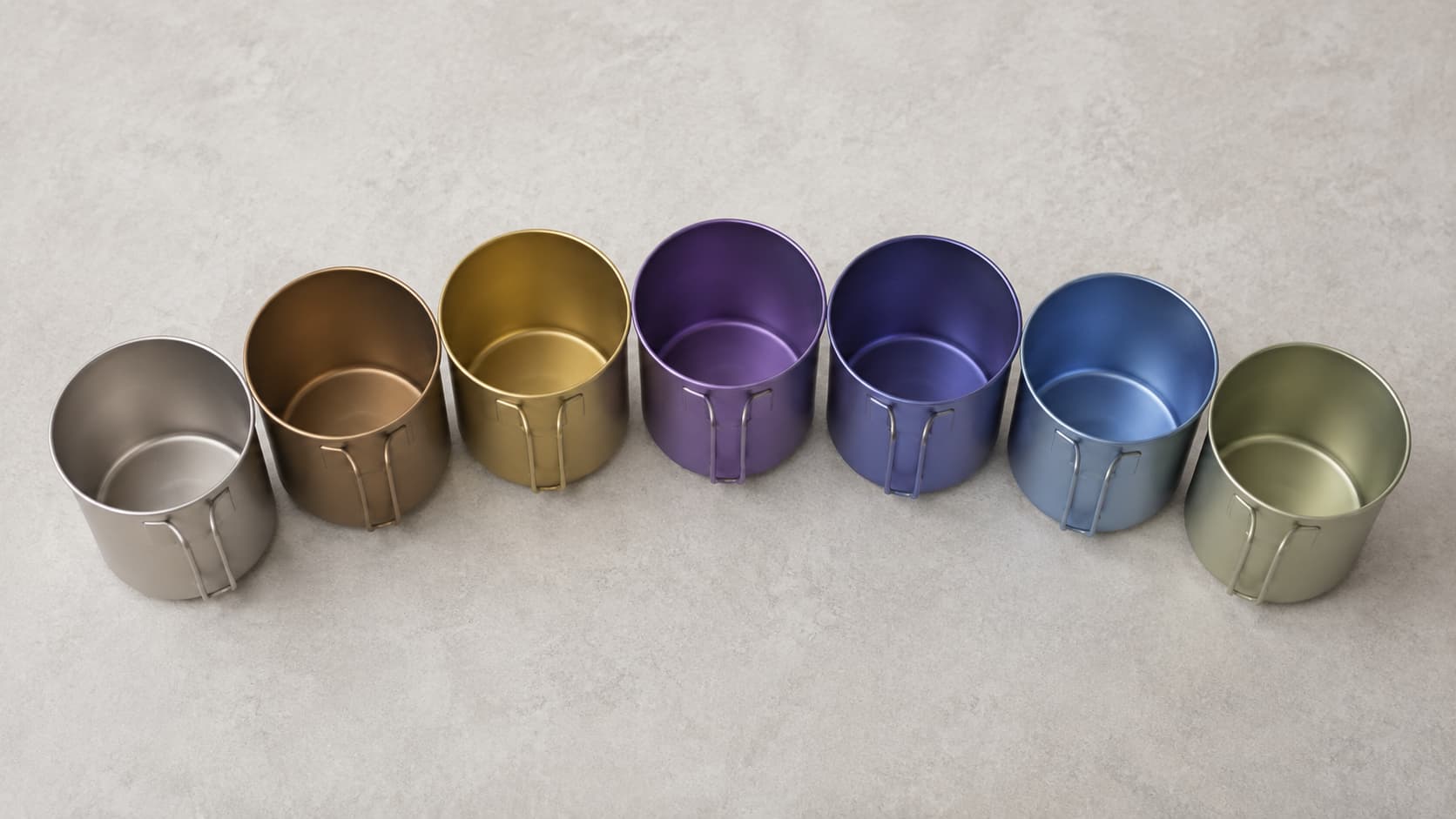
Titanium can display blue, gold, purple, bronze and other colors without being painted. These colors are created through anodizing, an electrochemical process that changes the thickness of the transparent oxide layer on the titanium surface.
Different oxide-layer thicknesses interact with light in different ways, producing the colors we see. This effect is known as thin-film interference.
In simple terms, anodized titanium gets its color from the way light reflects from its surface—not from added paint or pigment.
What Is Titanium Anodizing?
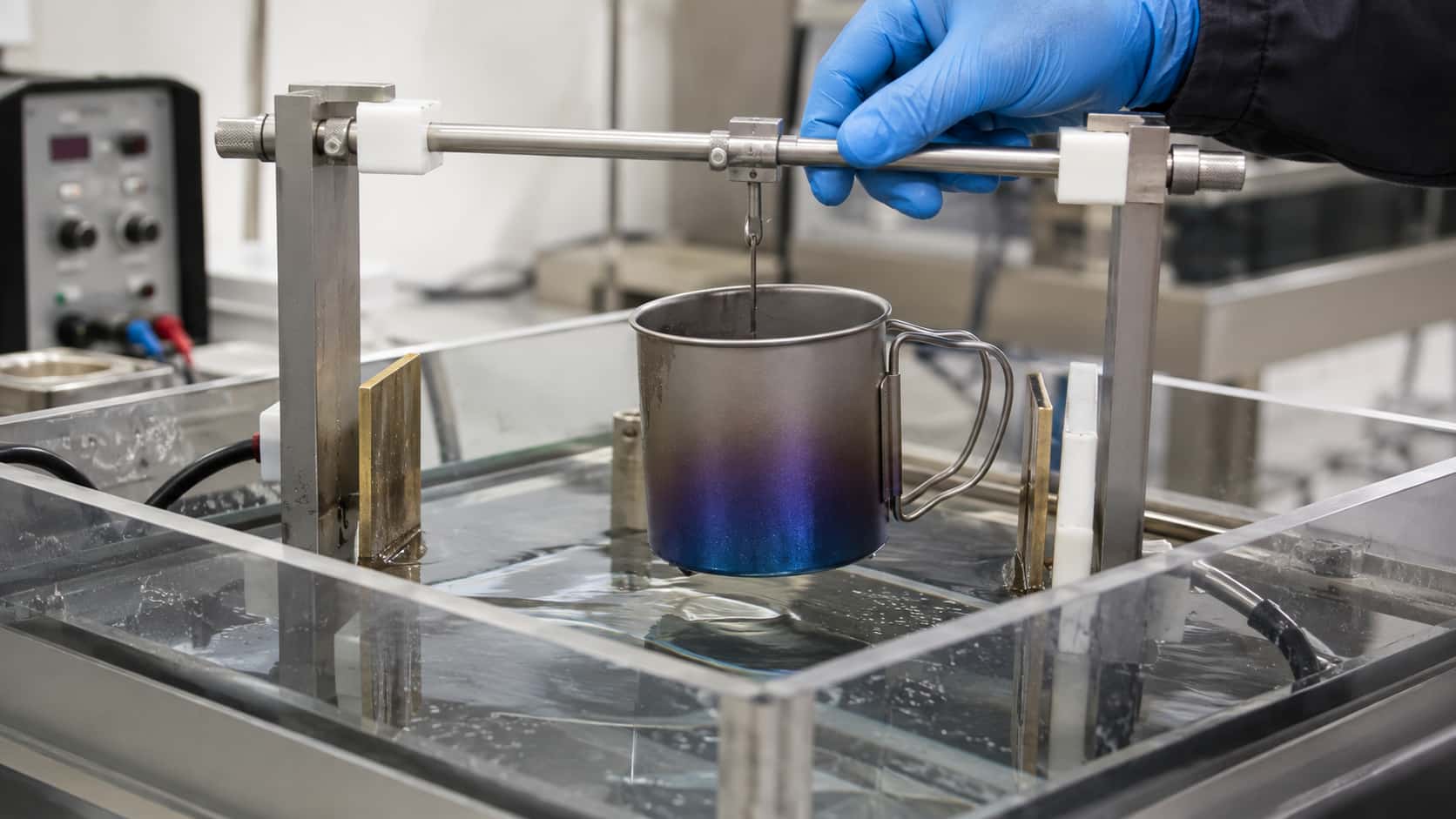
Titanium naturally forms a thin oxide layer when exposed to oxygen. During anodizing, titanium is placed in an electrolytic solution and an electrical voltage is applied.
The process increases the thickness of the oxide layer in a controlled way. As that layer changes, different wavelengths of light are reflected, creating different visible colors.
The basic process includes:
- Cleaning and preparing the titanium surface
- Placing the product in an electrolytic solution
- Applying a controlled electrical voltage
- Rinsing, inspecting and confirming the final appearance
No conventional paint is required to create the color.
Why Does Anodized Titanium Produce Different Colors?
The final color is mainly influenced by the thickness of the oxide layer. Anodizing voltage is one of the primary factors used to control that thickness.
As the oxide layer becomes thicker, the titanium may progress through a range of colors, including:
- Bronze
- Gold
- Purple
- Blue
- Light blue
- Yellow-green
- Pink
The exact appearance may also be affected by surface preparation, material condition, processing consistency, lighting and viewing angle.
For this reason, anodized titanium colors should be evaluated with physical samples rather than relying only on colors displayed on a computer screen.
Is Anodized Titanium Painted?
No. Anodized titanium is not colored with conventional paint.
Paint adds a separate pigmented layer over the material. Titanium anodizing modifies the oxide layer already associated with the titanium surface. The resulting color comes from light interference rather than pigment.
This allows the metallic character of titanium to remain visible and creates a clean, distinctive appearance.
However, anodized color is still a surface effect. Abrasion, scratching or inconsistent cleaning can affect how the color looks over time.
Why Can the Same Titanium Color Look Different?
Two anodized titanium products processed to a similar color target may still appear slightly different.
Common reasons include:
- Differences in surface texture or preparation
- Small variations in anodizing conditions
- Fingerprints, oil or contamination before processing
- Differences in the titanium material
- Lighting conditions
- Camera and screen color settings
- The angle from which the product is viewed
A polished surface and a matte surface can reflect light differently, even when they receive a similar anodizing treatment.
For outdoor brands, this means color approval should be based on an agreed physical reference sample and a realistic tolerance range.
Does Anodizing Change the Natural Properties of Titanium?
Anodizing is primarily used to change the surface appearance of titanium. It does not turn titanium into a different base material.
The product continues to rely on titanium’s inherent characteristics, including:
- Low weight
- Corrosion resistance
- Durability
- Clean metallic appearance
- Suitability for compact outdoor equipment
The anodized oxide layer is very thin, so the process does not add meaningful weight to outdoor cookware or drinkware.
Product performance still depends on the titanium grade, material thickness, construction, welding, forming and overall manufacturing quality—not color alone.
Why Do Outdoor Brands Choose Colored Titanium Cookware?
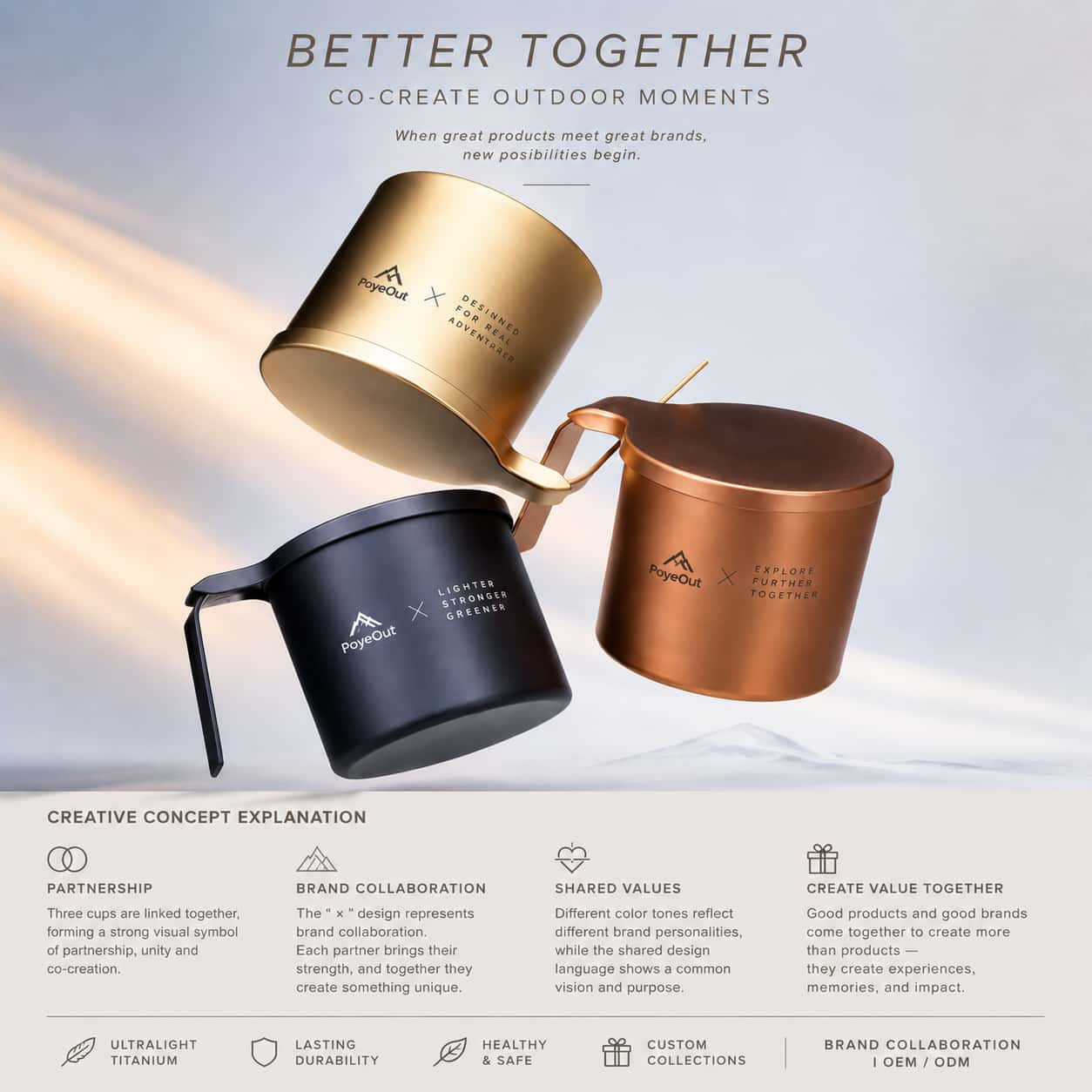
Color can help an outdoor product collection become more recognizable without covering the natural metallic appearance of titanium.
Outdoor brands may use anodized titanium to:
- Differentiate a product collection
- Create a recognizable brand color
- Coordinate cups, bowls, cookware and utensils
- Offer visual choices within one product range
- Give titanium products a more distinctive retail presentation
Anodized color should support the overall product concept. It should not replace practical considerations such as weight, capacity, nesting efficiency, handle design and outdoor usability.
What Should Brands Confirm Before Ordering Anodized Titanium Products?
Before confirming production, outdoor brands should discuss the following points with their supplier:
1. Titanium grade
Confirm the titanium grade used for the product and request the relevant material documentation when required.
2. Physical color reference
Use an approved physical sample or reference piece. Digital images alone cannot accurately represent every anodized titanium color.
3. Acceptable color variation
Anodized color can show reasonable variation between production batches or differently shaped areas. The acceptable range should be confirmed before production.
4. Surface preparation
The appearance of the final color depends partly on the condition and texture of the titanium surface before anodizing.
5. Product application
Confirm where the anodized finish will be applied and how the product will be used, cleaned, stored and packaged.
6. Sample approval
A physical sample allows the brand to evaluate the color, logo placement, product construction and overall presentation before placing a production order.
Anodized Titanium Cookware at PoyeOut
PoyeOut focuses on pure titanium outdoor cookware and drinkware for outdoor brands, distributors and retail collections.
Our existing product selection includes titanium pots, pans, kettles, cups, bowls, tableware and coffee products. We can support brands with product selection, private-label branding, coordinated product sets and retail packaging.
For projects involving anodized color, the final appearance should be confirmed through a physical reference and sample approval process before production.
Our goal is not simply to add color. It is to help brands create titanium products that remain practical for outdoor use while presenting a clear and recognizable product identity.
Frequently Asked Questions
Why does titanium change color when anodized?
Anodizing changes the thickness of the transparent oxide layer on the titanium surface. Light reflects through this layer at different wavelengths, producing different visible colors.
Does anodized titanium contain paint or pigment?
No. The color is produced by light interacting with the oxide layer rather than by conventional paint or added pigment.
What colors can anodized titanium produce?
Common colors include bronze, gold, purple, blue, light blue, yellow-green and pink. The available result depends on the anodizing conditions and surface preparation.
Can two batches of anodized titanium look slightly different?
Yes. Small variations may result from surface texture, material condition, processing parameters, lighting and viewing angle. A physical reference sample should be used for approval.
Does anodizing make titanium cookware heavier?
No meaningful weight is added. The anodized oxide layer is extremely thin.
Can anodized titanium be scratched?
Yes. Although anodized color is not conventional paint, abrasion or scratching can alter the surface and affect its appearance.
Is anodized color suitable for every titanium cookware design?
Suitability depends on the product structure, intended use, surface area and processing requirements. The application should be evaluated and sampled before production.
Conclusion
Titanium shows different colors because anodizing changes the thickness of its transparent surface oxide layer. The colors are created through light interference, not conventional paint.
For outdoor cookware brands, anodized titanium offers a way to create a distinctive product identity while preserving the clean metallic character of titanium. Consistent surface preparation, controlled processing and physical sample approval are essential for achieving a reliable result.
Looking for pure titanium cookware for your brand?
Contact PoyeOut to review our existing titanium cookware, drinkware and coffee product options.
Email: info@poyeoutdoor.com
Website: www.poyeoutdoor.com