
Learn how outdoor brands can evaluate a titanium cookware manufacturer, from TA1 pure titanium and OEM branding to product combinations, packaging and quality control.
For outdoor brands and retailers, choosing a titanium cookware manufacturer is about more than comparing prices.
The right supplier should understand titanium materials, outdoor use, product combinations, branding, packaging and production quality.
This becomes especially important when a brand wants to build a complete titanium product line rather than source only one pot or cup.
So what should buyers look for when evaluating a titanium cookware supplier?
1. Confirm the Titanium Material
The first question should be simple:
What titanium grade is being used?
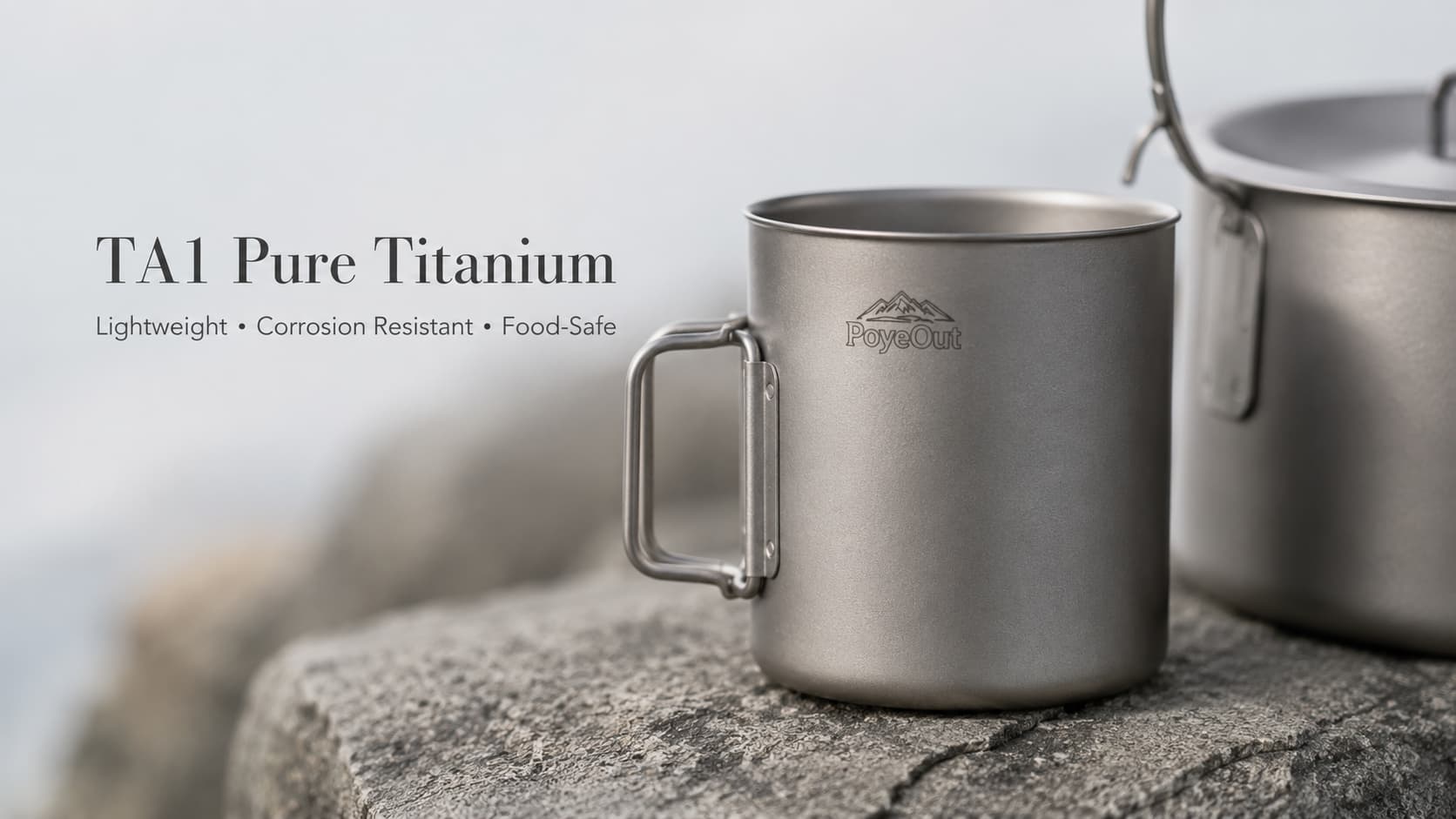
For outdoor cookware and drinkware, pure titanium is valued for its low weight, corrosion resistance and suitability for food-contact applications.
At PoyeOut, we focus on TA1 pure titanium for our outdoor cookware, drinkware and coffee products.
Buyers should not rely only on the word “titanium” in a quotation. A reliable supplier should be able to clearly identify the material used and maintain consistent specifications during production.
2. Look Beyond a Single Product
Many buyers start with one item, such as a titanium pot, cup, kettle or coffee dripper.
But the bigger opportunity is often the product line that can be built around it.
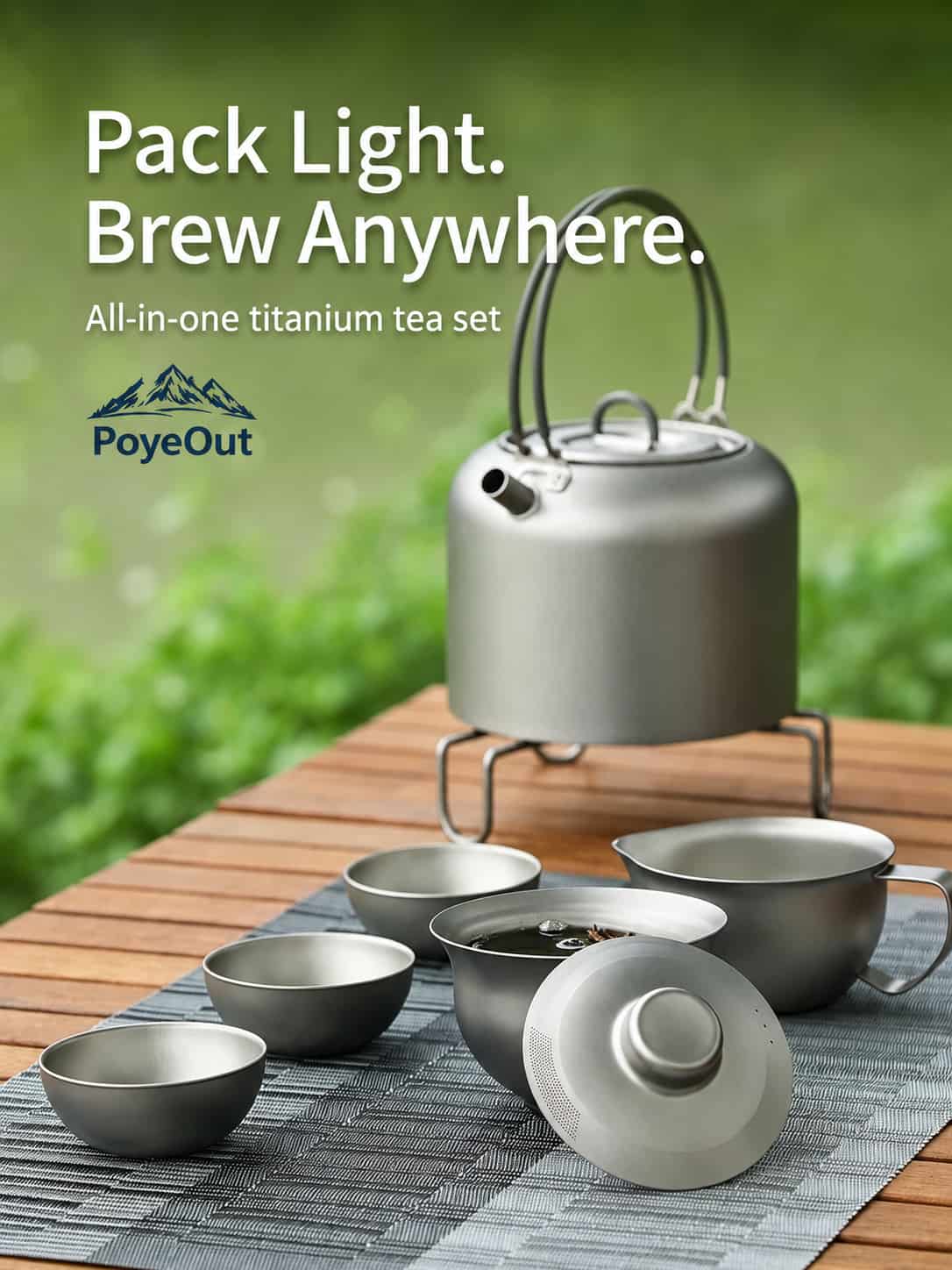
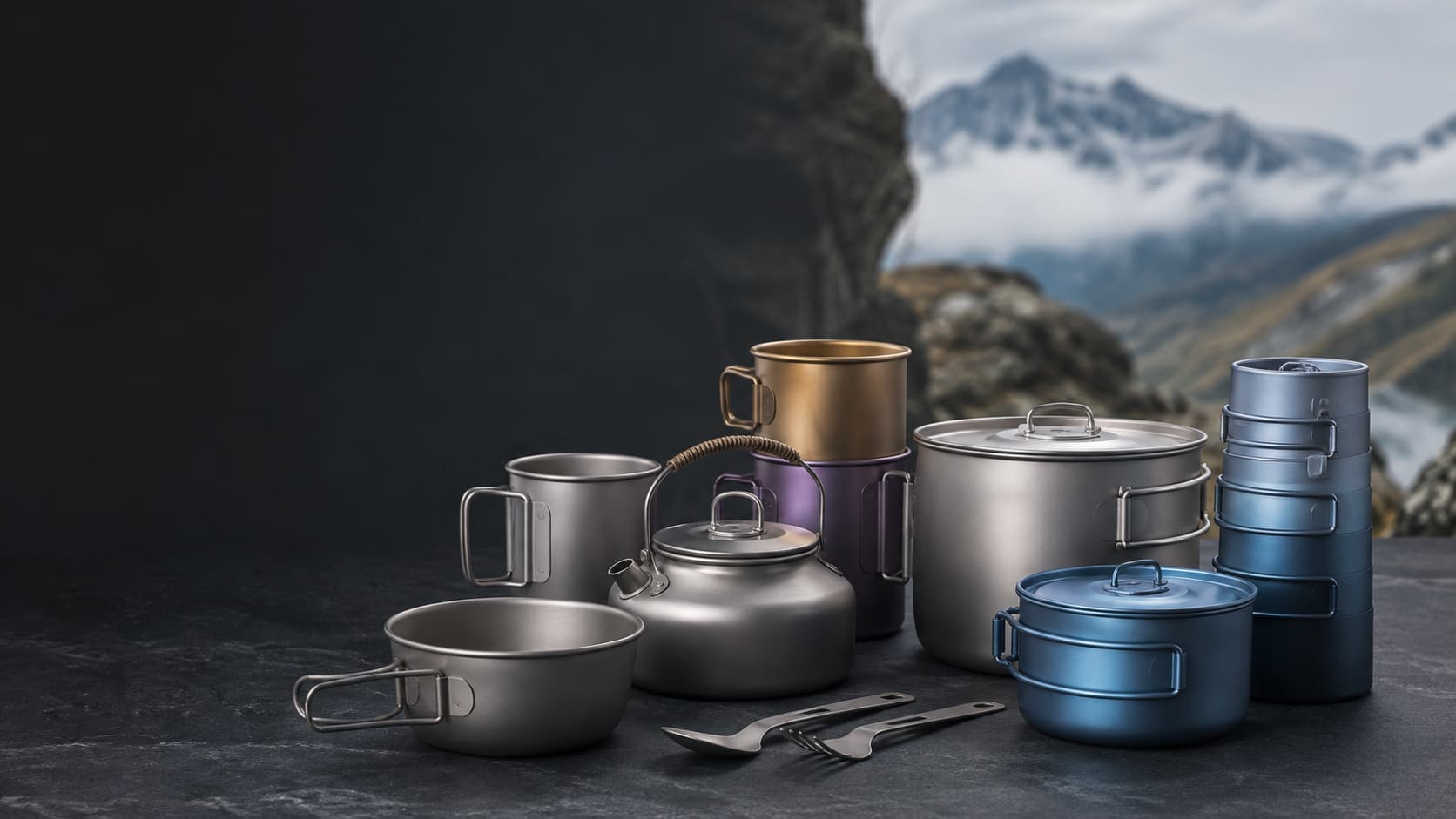
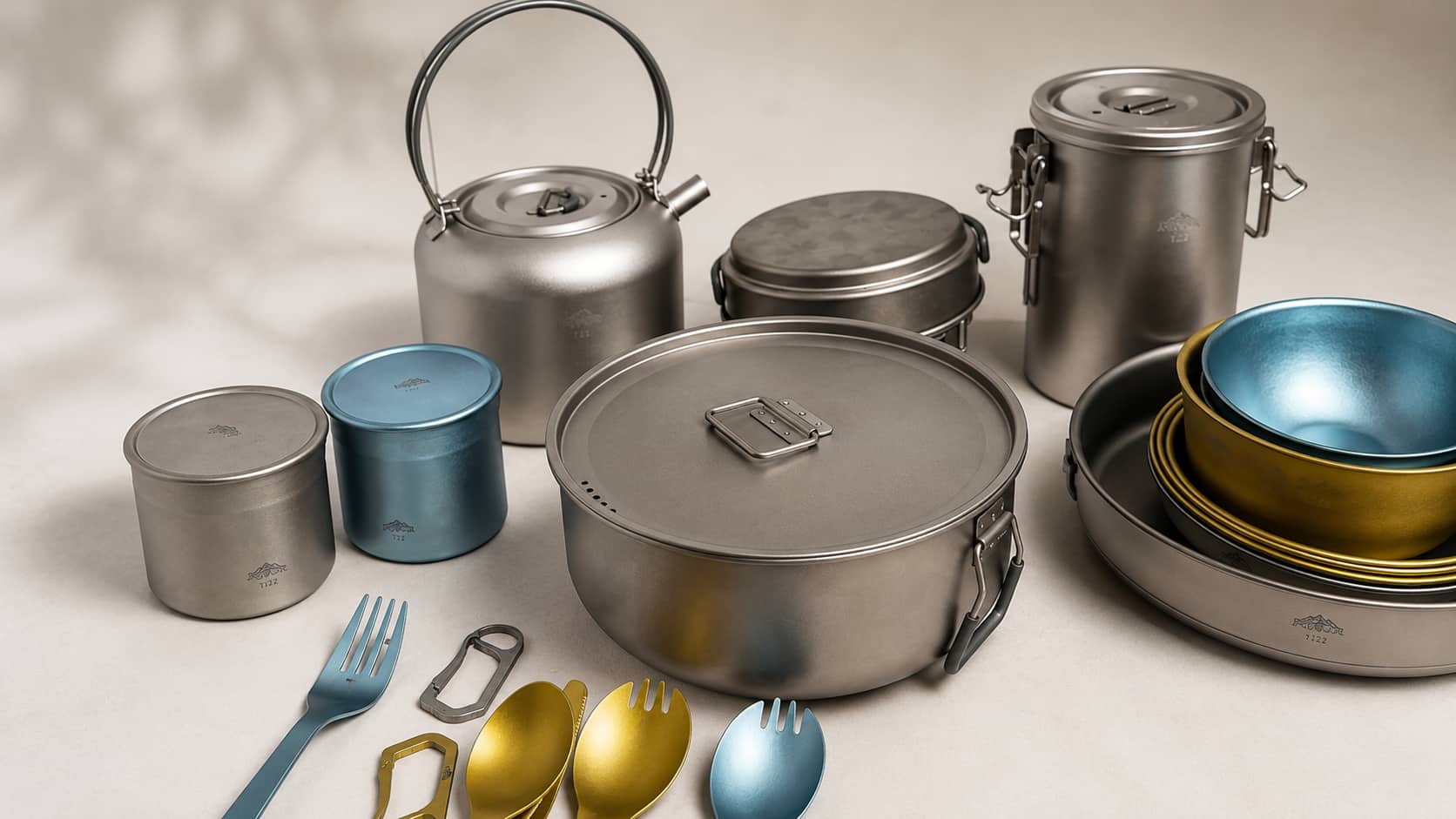
A titanium pot can be combined with cups, bowls, pans, kettles or utensils. A coffee cup can become part of a compact outdoor coffee collection.
This is why a broad existing product library is useful.
At PoyeOut, our range includes 1,000+ titanium SKUs across cookware, drinkware, cutlery, coffee equipment and outdoor accessories.
Products can be selected individually or combined into coordinated sets according to the target market.
3. Evaluate OEM and Private Label Capability
For most B2B customers, the finished product should represent their own brand.
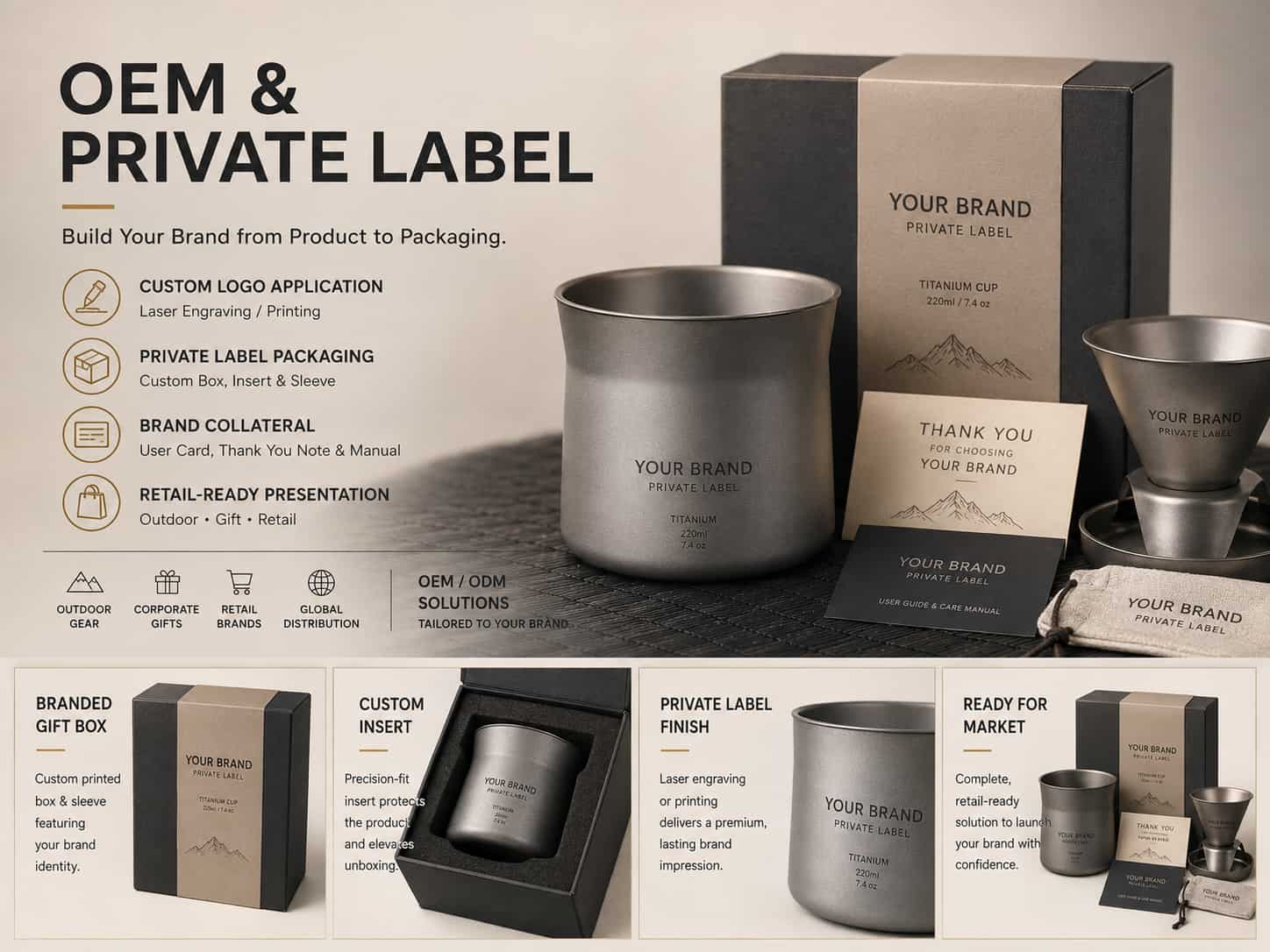
A titanium cookware supplier should therefore be able to support OEM and private-label requirements such as:
- Laser-engraved logos
- Custom product combinations
- Retail boxes
- Product manuals
- Brand cards
- Barcode labels
- Gift packaging
Good customization is not simply adding a logo.
The product, packaging and brand presentation should work together as one consistent collection.
4. Packaging Should Support the Market Position
Packaging is especially important for premium titanium products.
It protects the goods during transportation, but it also affects how customers perceive the final product.
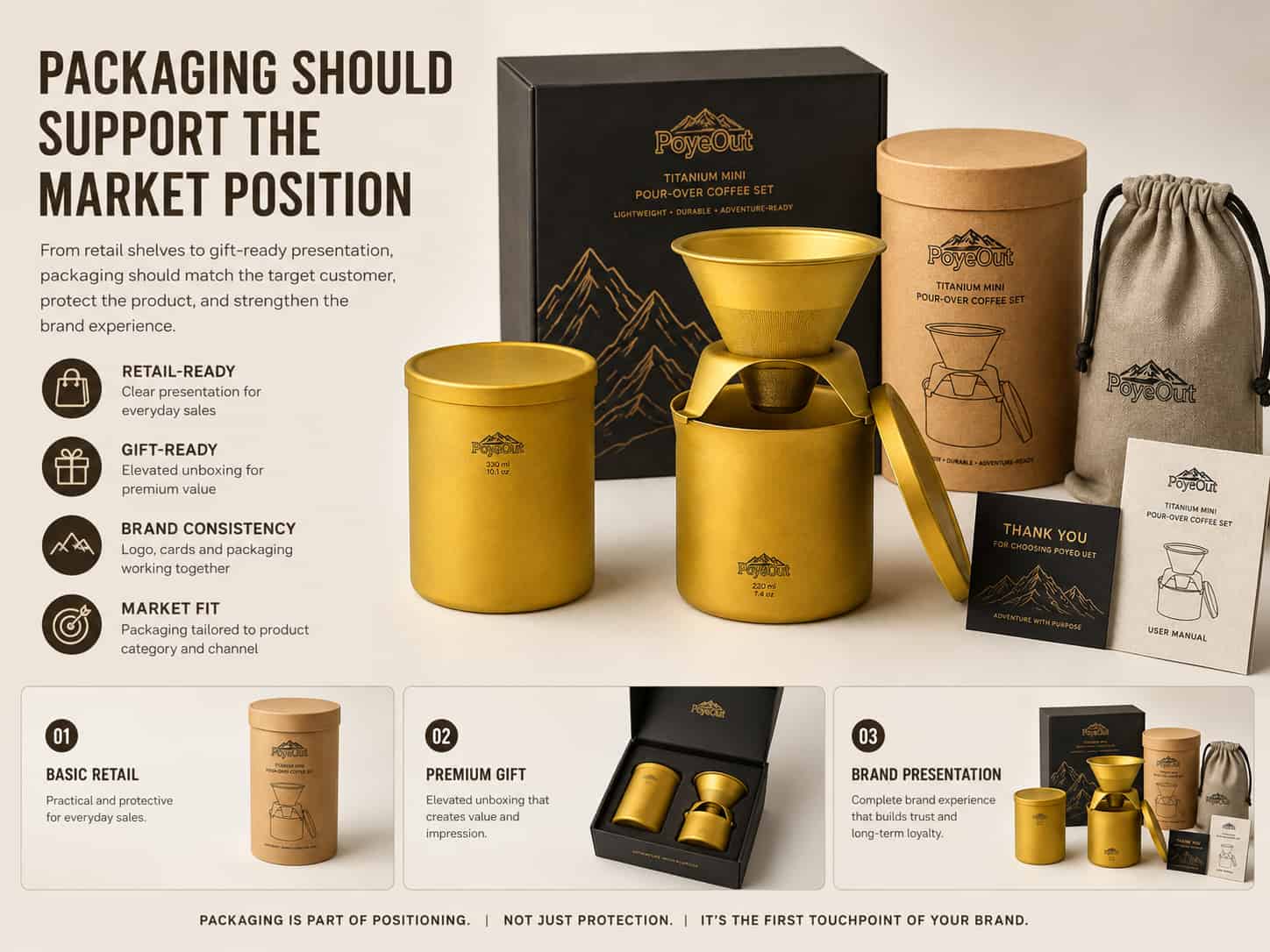
Depending on the market, packaging may include individual retail boxes, multi-piece gift sets, protective inserts, storage cases and branded printed materials.
A lightweight premium outdoor product should also have packaging that feels clean, practical and consistent with its positioning.
At PoyeOut, we support retail-ready packaging for both individual products and coordinated titanium sets.
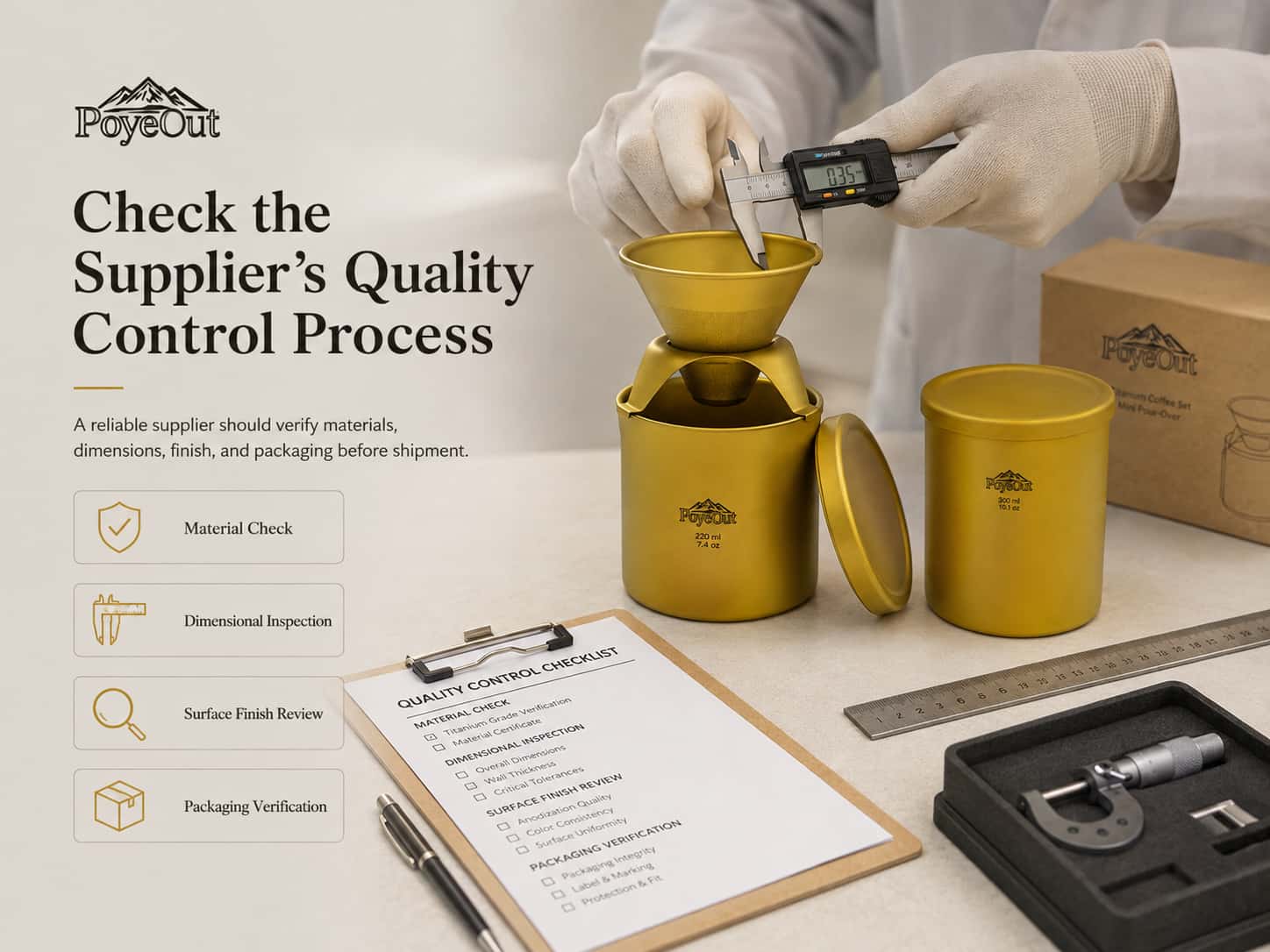
5. Check the Supplier’s Quality Control Process
A good sample is only the beginning.
For B2B buyers, the more important question is whether quality remains consistent during volume production.
Final inspection may include:
- Product dimensions
- Surface appearance
- Welding and assembly
- Logo position
- Product quantity
- Packaging condition
- Overall consistency
Before shipment, final quality control helps identify visible, assembly or packaging issues before the goods leave the supplier.
For a brand, consistent production is more valuable than one perfect sample.
6. Make Sure the Products Fit Real Outdoor Use
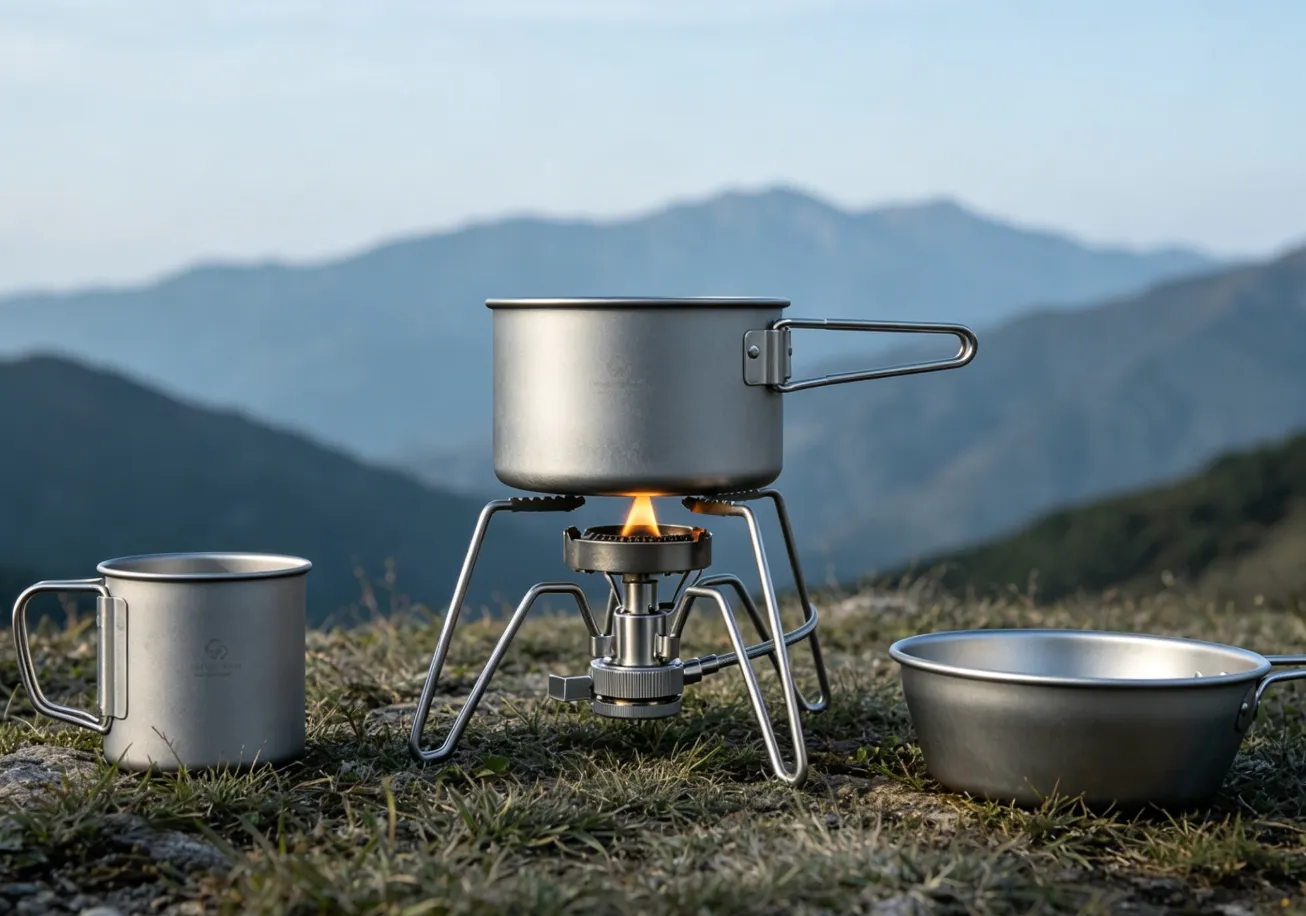
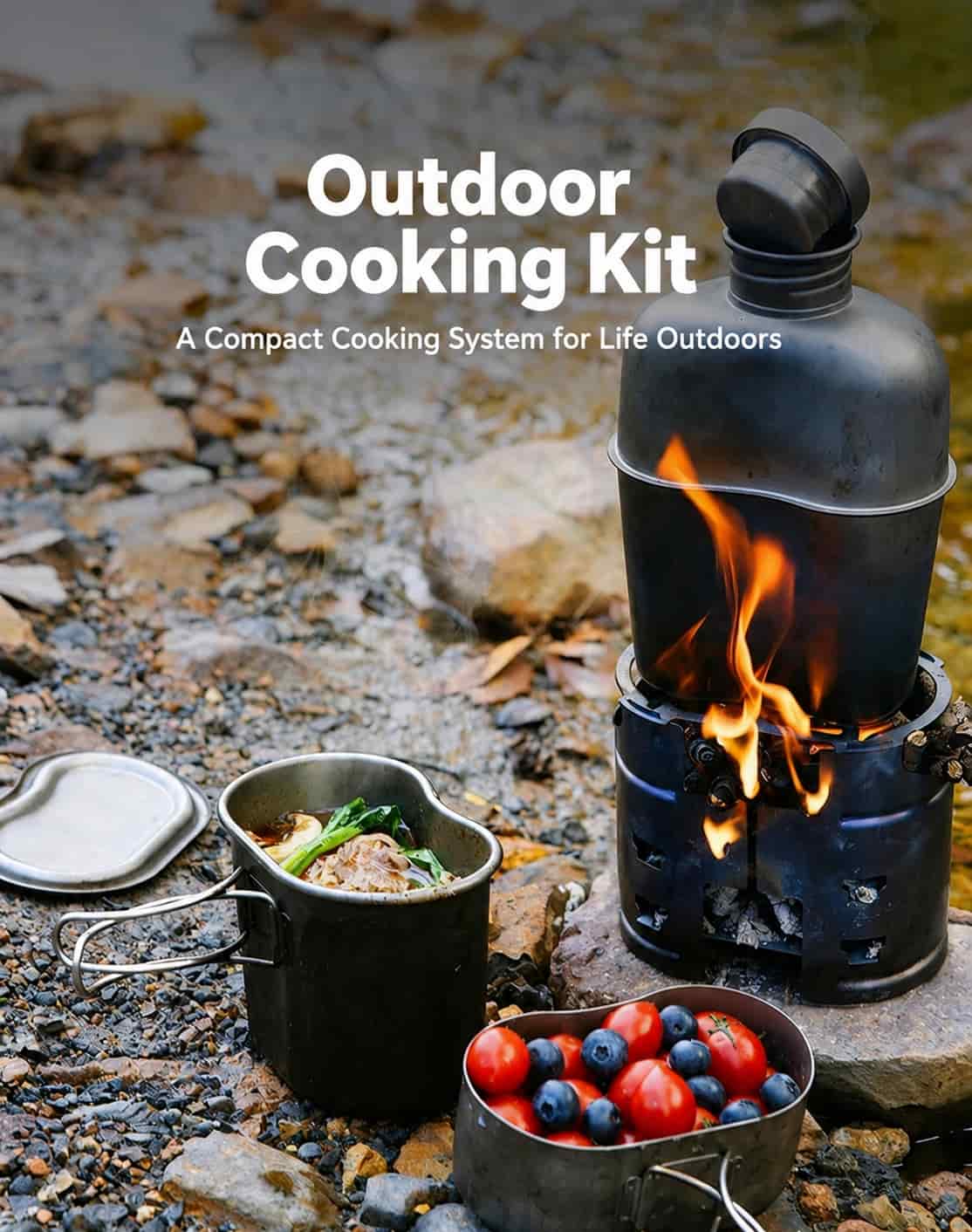
Outdoor cookware should make sense when it is carried, packed, heated and used outside.
Buyers should consider practical questions such as:
Does the cookware nest efficiently?
Is it lightweight enough for backpacking?
Are the handles practical during use?
Can several products work together as a compact set?
Is the product easy to store and carry?
The strongest outdoor product is not always the one with the most features.
Often, it is the product where every component has a clear purpose.
7. Use Samples to Evaluate the Product Before Production
Samples allow buyers to evaluate more than appearance.
They can help confirm:
- Material feel
- Weight
- Functionality
- Surface finish
- Branding
- Product compatibility
- Packaging direction
For coordinated sets, samples are especially useful for checking whether the selected products work well together before bulk production begins.
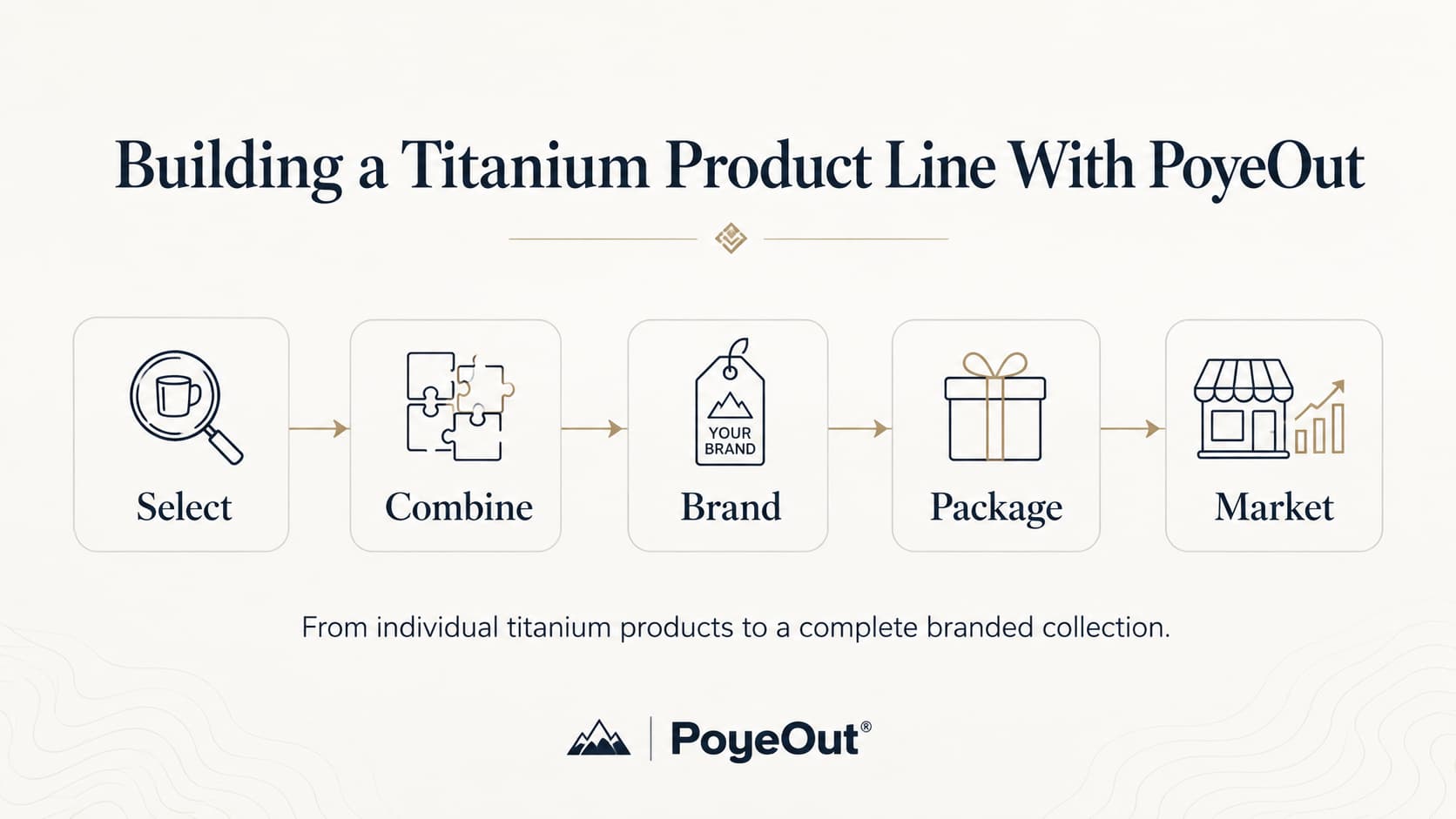
Building a Titanium Product Line With PoyeOut
PoyeOut works with outdoor brands, retailers and distributors looking to add pure titanium products to their collections.
Our product range includes:
- Titanium cookware
- Titanium drinkware
- Titanium kettles
- Titanium bowls and plates
- Titanium cutlery
- Titanium coffee equipment
- Outdoor accessories
- Coordinated titanium sets
Products can be selected individually or combined according to your market and product positioning.
We also support OEM branding and retail packaging, helping customers build a more consistent titanium collection under their own brand.
For some customers, the starting point may be one cup or pot.
For others, it may be a complete outdoor cooking or coffee collection.
The goal is the same:
Choose the right products, create the right combination, and build a titanium product line that fits your market.
Frequently Asked Questions
What titanium is suitable for outdoor cookware?
Pure titanium is commonly used for lightweight outdoor cookware because it combines low weight, corrosion resistance and suitability for food-contact applications.
Can titanium cookware be private labeled?
Yes. Depending on the product, private-label options can include laser engraving, customized packaging and branded printed materials.
Can different titanium products be combined into one set?
Yes. Pots, cups, bowls, kettles, cutlery and coffee products can be selected and combined into different configurations when their dimensions and intended uses are compatible.
What should buyers check before ordering titanium cookware?
Important areas include titanium grade, dimensions, weight, surface finish, functionality, branding, packaging and final quality control.